
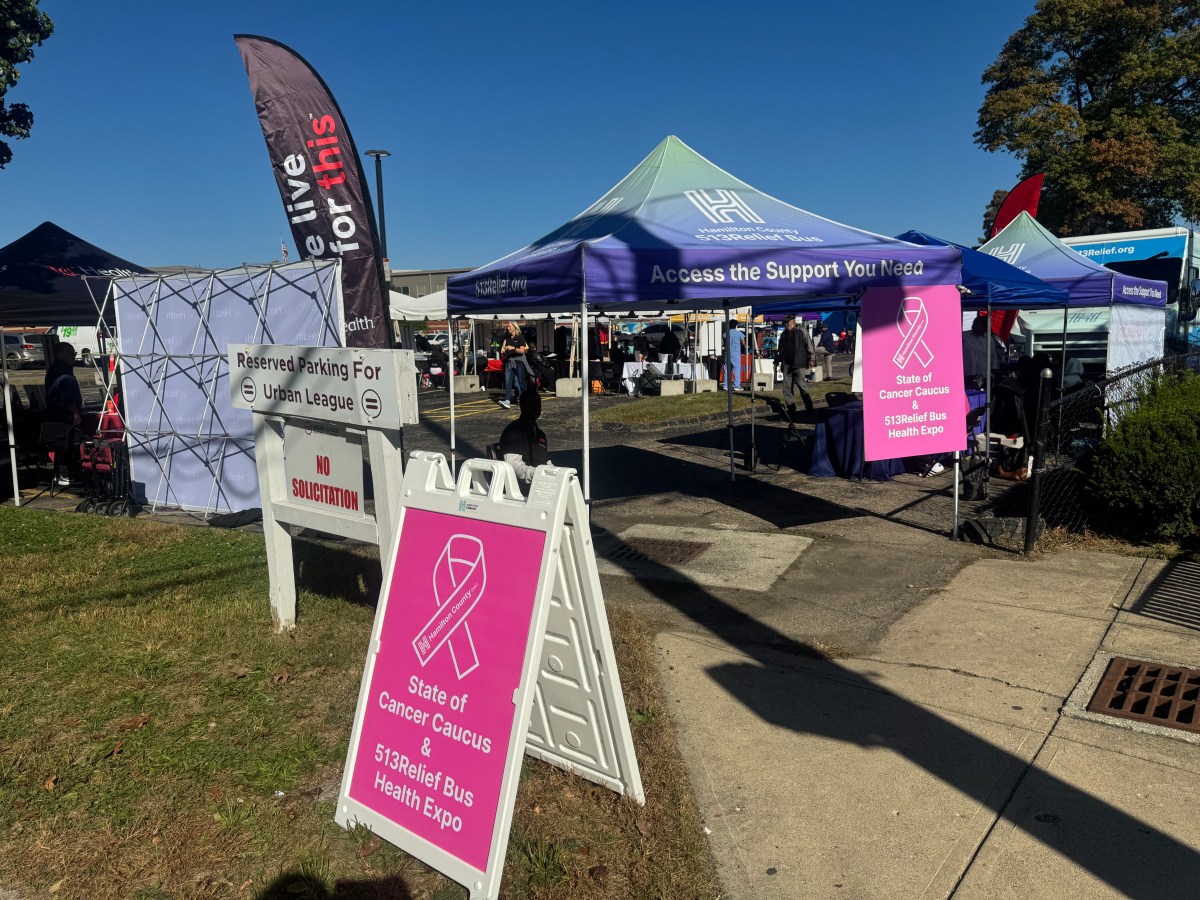
As Hamilton County cancer rates exceed the national average and breast cancer cases increase, a UC Health oncologist is urging people to get screened.
According to Dr. Leeya Pinder, gynecologic oncologist for UC Health, 4,700 new cases of cancer per year in the county. About 1,600 residents die of cancer each year.
Pinder presented this data Wednesday at a panel hosted by the Hamilton County Commissioner Alicia Reece at the third annual State of Cancer Caucus and 513Relief Bus Health Expo. Her research aims to reduce health disparities and improve outcomes for women in historically marginalized communities.
While diagnosis rates for Black patients are slightly lower than their white counterparts, the disparities in care Black patients experience mean the disease is more likely to cost them their lives, Pinder’s research indicates.
“We have very real disparities when it comes to our cancer care,” Pinder said. “We know that there are historic racism and historic problems with different institutions as to why people don’t show up to get care. We know that the way that people are treated makes a difference in how they show up to get care.”
Systemic barriers like these can make it harder for people to get screened and tested, Pinder explained. These disparities can lead to people getting diagnosed at later stages, which reflects in higher mortality rates in these populations.
For example, in Hamilton County, white women account for 141 per 100,000 residents in new cases with 18 deaths, whereas Black women account for 137 diagnoses per 100,000 residents with 29 deaths.
“Oftentimes Black people or people who are historically minoritized actually show up [for screenings] in later stages, and so they have higher rates of late stage disease, which means they also have higher rates of death,” Pinder said.
She also explained that these populations often don’t receive the same benefits in their health care and have historically been left out of research.
About 44,651 Hamilton County adults aged 18 to 64, are uninsured, according to the National Institute on Minority Health. That accounts for 9.2% of that age group.
Hamilton County cancer by the numbers
According to Ohio Department of Health cancer data, the top five types of new cancer cases between 2018 and 2022 were:
- Breast (female)
- Lung and bronchus
- Prostate
- Colon and rectum
- Melanoma of the skin
Annually, about 472 cases per 100,000 people were diagnosed in Hamilton County during that period. That exceeds the national average of 444.6 cases per 100,000 people.
For cancer deaths, lung and bronchus, which is a malignancy that originates in the bronchi, the main tubes that connect your windpipe, tops the list, followed by colon and rectum, pancreas, breast (female) and lastly prostate.
Cancer was diagnosed more in males than females, at 515.4 per 100,000 males compared to 445.5 per 100,000 females.
Black Hamilton County residents are diagnosed at slightly lower rates than their white counterparts, yet experience higher mortality rates. Deaths of Black residents are 181.3 per 100,000 people, versus 150.7 deaths per 100,000 people for white residents.
A survivor’s story
During a panel following Pinder’s presentation, Hamilton County Commissioner Alicia Reece spoke with survivors of cancer. One of them was Dr. Elizabeth Shaughnesy.
“Some people call it ‘the gift that keeps giving,’” Shaughnesy said with a laugh. “You’re not the same person you were when you first started.”
Having a community behind her has helped with the emotions, and she exercises every day to maintain her physical health. She has a team of doctors that continue to aid in her recovery. She explained there are psychological effects after the physical effects of cancer.
During the panel, Closing the Health Gap President and CEO Renee Mahaffey Harris also discussed what she called “weathering” of the brain and body from chronic stress. That can contribute to health disparities, including increased cancer of death rates, for Black women.
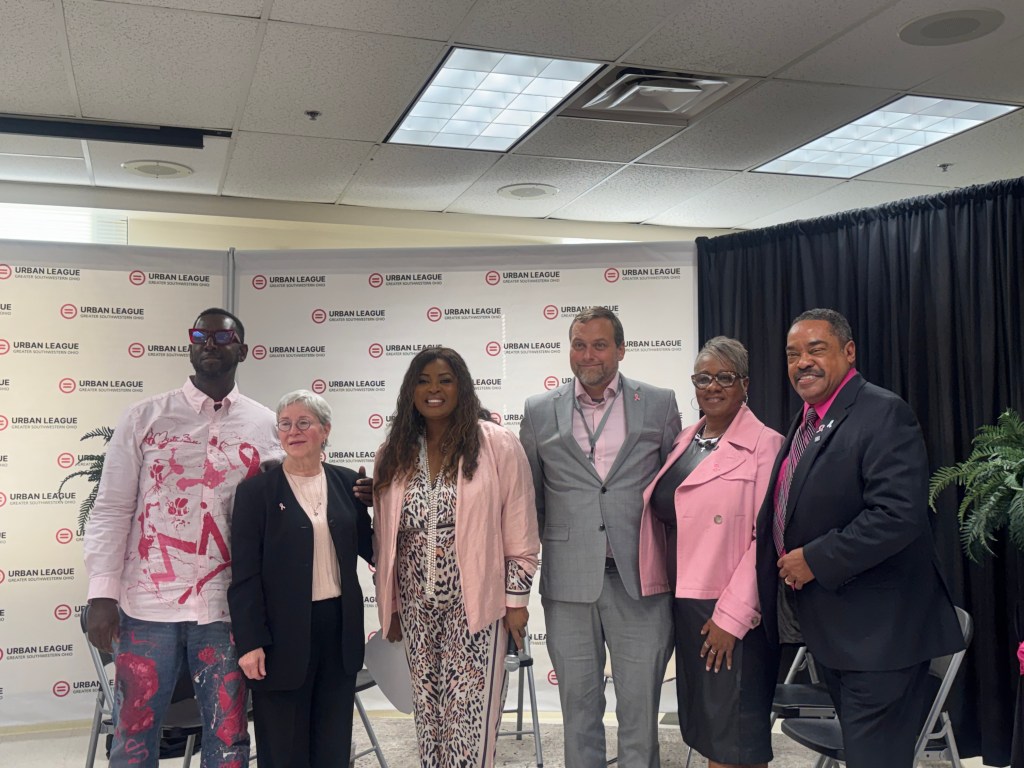
“Yes, it’s about our lifestyle, exercise, how we eat, but it’s also about how we take care of ourselves,” Mahaffey Harris said. “Systemic factors that we don’t control have an impact on incidence and mortality of diseases.”
Where to get help
The ODH Breast and Cervical Cancer Project aims to help women navigate the healthcare system to gain access to screenings and other preventative care, no insurance required. The Southwest Ohio office is located at Premier Community Health 3170 Kettering Blvd in Moraine, in Montgomery County, and can be contacted at 1-866-838-8973.
The Hamilton County 513Relief Bus also offers cancer screenings and other health services. A calendar of upcoming events is available here.
If you believe anything in these notes is inaccurate, please email us at documenters@signalcincinnati.org with “Correction Request” in the subject line.
Find more Documenters’ notes here.