
Meeting summary:
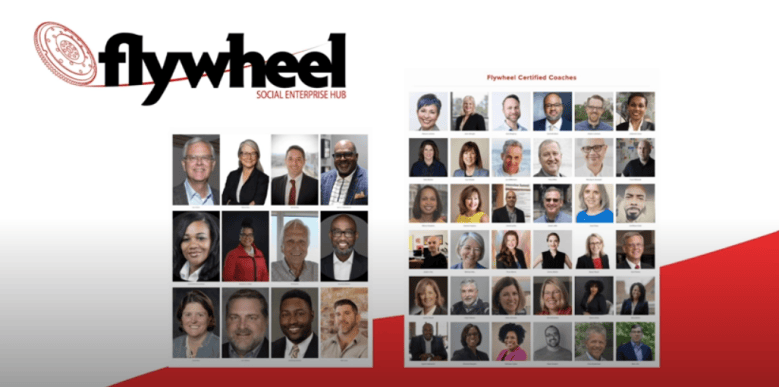
- Flywheel detailed the various channels in which they help entrepreneurs expand their startups, including innovation labs, summits and podcasts.
- Flywheel entrepreneurs spoke about how the startup accelerator has helped their businesses by providing mentorships, fellowships and investments.
- An update on the Composition of the Workforce Engaged in City Projects was presented.
Documenter’s follow-up question:
- What can the City of Cincinnati do to increase the percentage of local union workers?
- What strategies can the City of Cincinnati implement to increase female and minority union worker percentages?
- What is the age of the workers used in the EIP data? If the results show an older demographic, could this create opportunities to increase these percentages through youth outreach programs?
Notes
The meeting was called to order at 10:05 a.m.
Council members present
- Vice Mayor Jan-Michele Kearney
- Council Member Scotty Johnson
- Council Member Anna Albi
- Council Member Mark Jeffreys
Agenda (found here)
Item 1. Presentation: Access to Capital, First Financial Bank – Presented by Angelica Johnson, senior vice president of commercial & SBA lending
This presentation was HELD due to the presenter’s absence.
Item 2. Presentation: Flywheel Social Enterprise Hub- Presented by Donna Zaring, executive director
Flywheel Social Enterprise Hub is a startup accelerator that helps entrepreneurs grow their businesses through various channels:
- Social Innovation Labs
- Housing Stabilization Hackathon
- Pave the Way
- Community Building & Education
- Impact Catalyst Midwest
- Annual summit that hosted 214 attendees from 16 states this past June.
- On The Fly! Podcast– 30 episodes featuring founders, funders and community leaders.
- Impact Catalyst Midwest
Zaring also presented statistics of Flywheel in the past 10 years.
- 70 startups
- 80% success rate
- $10 million follow-on capital
- 697 job years supported
- 51% BIPOC
- 68% women
A brief question period followed:
- Kearney asked: “How does one get involved([in Flywheel)?”
- Zaring replied by emailing them personally (found on the Flywheel webpage), donating, or becoming a business coach.
- Kearney asked: What is the greatest challenge with startups?
- Zaring said many entrepreneurs aren’t seeking venture capital because they want to stay true to their mission, which is wy networking opportunities such as Impact Midwest are helpful because they match entrepreneurs with investors.
- Albi asked why Flywheel focuses on startups rather than established businesses.
- Zaring replied, trying to solve a community challenge is more important than the structure of a company, which is less relevant. Zaring also said Flywheel focuses on both nonprofit and for-profit businesses, and the key is generating revenue, and not depending on donations to make it.
Three entrepreneurs who have worked with Flywheel spoke about how the accelerator has greatly helped their businesses.
Dwylett Chambers Montgomery, creator of “The Great Adventures of Park Clinic,” an animated children’s health series.
- The series aims to demystify health care for kids.
- Flywheel helped take Montgomery’s idea from a PowerPoint to walking and talking with business coaches and investors.
- Through Flywheel, Montgomery now has advisers and attorneys, as well as a YouTube series consisting of two-minute episodes.
Candice Crear, founder & CEO of From Fatherless to Fearless.
- In the last five years, From Fatherless to Fearless has grown to 500 people per year, an increase of 750%.
- In conjunction with Flywheel, an innovation salon was created, along with a 12-month fellowship, where fellows can work with clients (with no booth rent), receive a stipend, as well as counseling, located in the middle of the salon.
Jide Fresh, founder of In Fly We Trust, a creative lifestyle brand.
- Flywheel connected Fresh with three mentors who helped build the foundation for their brand.
- At the podium, Fresh introduced a 90-page interactive book titled “PaperCutz: Cincy Love,” that features many Cincinnati landmarks such as Findlay Market and Washington Park.
- Fresh proposed that with the city’s help, 10,000 books be published and given to Cincinnati residents and tourists for free.
- The city could help fund the project through partnerships, private efforts, donations, etc., Fresh suggested.
Item 3. Presentation: Composition of the Workforce Engaged in City Projects. Presented by Laura Castillo, director, Economic Inclusion & Procurement (EIP); Jonah James, development manager, EIP; and Lydgia Sartor, EIP deputy director
Sartor gives an introduction, stating that the initial report was filed on Aug. 5, 2023, updated on May 6, 2024. The presentation is an updated report for the 2025 calendar year.
EIP is working in tandem with the Office of Performance and Data Analytics (OPDA).
Jonah James takes over for the presentation. The payroll data is current as of Sept. 2, and details the changes in the original data from the previous reports. The data includes the workers and hours on city-funded prevailing wage projects.
- Minority worker hours
- Percentage of minority workers increased by 4.45%, from 18.16% to 22.61%
- Minority worker hours increased by 5.68%, from 16.39% to 22.07%
- Female Worker Hours
- Percentage of female workers decreased by 0.05%, from 3.58% to 3.53%
- Female worker hours decreased by 0.01%, from 3.39% to 3.38%
- Workforce Residency Data
- The percentage of workers residing in Cincinnati increased by 3.35%, from 23.35% to 26.7%
- 63.08% of workers resided in the Tri-State area. The original data was not included in the original report for comparison.
- The percentage of workers residing in Cincinnati increased by 3.35%, from 23.35% to 26.7%
James presents updates on workforce union status from the same presentation. Some data is uncollected due to the data point being turned on around a year ago.
- All Worker Union Status (out of 3,956 workers)
- 2.58% come from a mixed shop (union and non-union workers)
- 47.04% come from a non-union shop
- 50.38% come from a union shop
- Minority Worker Union Status (out of 807 workers)
- 0.74% come from a mixed shop
- 63.84% come from a non-union shop
- 35.42% come from a union shop
- Female Worker Union Status (out of 135 workers)
- 0% come from a mixed shop
- 54.81% come from a non-union shop
- 45.19% come from a union shop
Jeffreys asked that because only 26.7% of workers live in the Greater Cincinnati area, “How do we make sure … these jobs stay local?”
Albi asked if the low percentage of female workers (~3.5%) is a national trend.
Castillo replied that information is not available yet, but EIP is working with OPDA to retrieve said data.
Jeffreys said goals should be set to increase minority and female numbers.
Item 4. Report on workforce development programs and future talent readiness. By Sheryl M.M. Long, City Manager
This report was NOT commented on during the committee meeting.
Items 2-4 are filed without objection.
The meeting is adjourned at 11:05 a.m.
If you believe anything in these notes is inaccurate, please email us at documenters@signalcincinnati.org with “Correction Request” in the subject line.
Find more Documenters’ notes here.