
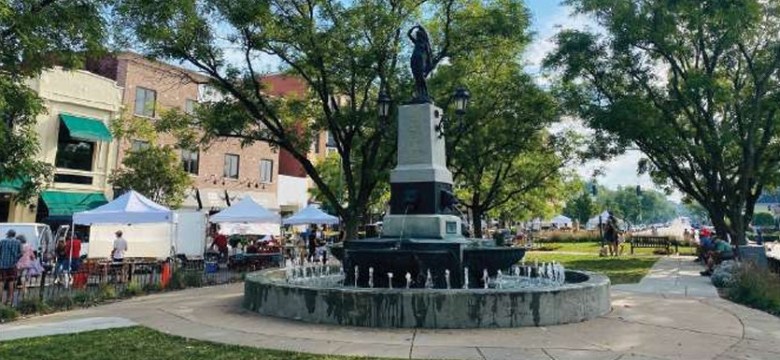
Meeting summary:
- A proposal would extend the Interim Development Control (IDC) Overlay District for an additional nine months.
- The Hyde Park Neighborhood Council proposes an updated neighborhood plan for Hyde Park.
- The Bus Rapid Transit (BRT) on Reading Road and Hamilton Avenue can help bolster housing and transportation in the city.
Documenter’s follow-up question:
- What are the largest concerns that the residents of Hyde Park have with the new neighborhood plan?
- How will the new Bus Rapid Transit (BRT) system be implemented to have safe accessibility?
- How do data centers impact the daily lives of Cincinnati residents?
Notes
Cincinnati City Council Meeting (Tuesday, March 31, 2026) – Agenda
Meeting called to order at 1:02 p.m.
Meeting adjourned at 2:02 p.m.
Committee members in attendance:
Committee Chair Mark Jeffreys
Vice Chair Anna Albi
Council Member Jeff Cramerding
Council Member Ryan James
Council Member Evan Nolan
Council Member Meeka Owens
Council Member Seth Walsh
Presentations:
Proposed nine-month Extension of IDC Overlay District #89 “Data Centers” by Sophia Ferries-Rowe, City Planner
- Sophia Ferries-Rowe began the presentation with background on the approval, establishment, and extension of Interim Development Control (IDC) from January to March 2026.
- Ferries-Rowe said that the purpose of the zoning study is to define “data center” in the zoning code because there is no explicit definition in the city’s current zoning code for data centers. The study will result in policy recommendations for appropriate zoning districts for data centers, to be followed by a diligent legislative process.
- In the presentation, the following are criteria for a one-year IDC District
- Ongoing study: Studying potential amendments to Cincinnati Zoning Code that would affect the IDC district
- Study completion: Study not yet complete
- Inconsistent issue: Changes in use, construction of new structures, alteration/demolition of existing structures would be inconsistent with preliminary objectives or findings.
- Ferries-Rowe reiterated that the IDC is consistent with Plan Cincinnati (2012) within the complete initiative area and sustain initiative area.
- Recommendation:
- The City Planning Commission recommended that City Council take the following action: Extend the IDC Overlay District No. 89, “Data Centers,” for a period of nine additional months, or until the Department of City Planning and Engagement’s zoning study is complete and implemented.
Comments:
- Vice Chair Anna Albi thanked the administration for being proactive about this and defining what a data center is to understand the economic impact in communities. She suggested a coordinated approach with neighboring municipalities on the matter.
- Council Member Evan Nolan asked if anyone related to the operation or construction of data centers reached out to the city since they approved the original IDC in February. Ferries-Rowe said they will be going to the city planning commission within the next month, so they have received some form of contact. As a reminder, these permits are only going through the planning commission, not the council itself.
- Council Member Jeff Cramerding asked Ferries-Rowe how IDC could be used as a tool and when it is used best. Ferries-Rowes said it is a response to what they need, and they will give the public more space to speak on any issues.
Recommendation (Item #2) Passed
Plan Hyde Park by Emily Burns, City Planner
- Emily Burns, Janet Buening and Dave Hapner were introduced to the committee.
- Janet Buening, member of the Hyde Park Neighborhood Council, introduced the plan:
- The Hyde Park Neighborhood Council and Steering Committee have spent a long time developing equitable growth and housing. Buening has been a member of the Hyde Park Council since 1974 and spoke to the committee as the chair of the plan they began many years ago.
- According to Buening, extensive community engagement about the planning included speaking with developers, residents and senior citizens. Over the years, they have had more than 21 community leaders, business owners, executive directors, school principals, pastors, librarians, architects and developers attend the planning meetings. They have done everything they can to reflect what the community wants to have, she said, adding that they have also worked hard to keep Hyde Park a place that people want to live, work and raise their children in. All concerns were incorporated within this plan that did not conflict with city regulations.
- Buening thanked the Steering Committee and residents for using this plan for community guidance.
- Buening said the most common request she received is to preserve the character of Hyde Park Square and to maintain a neighborhood business district.
- Emily Burns, City Planner, described the Hyde Park Plan:
- The new plan will be Hyde Park’s first since 1983. It will establish the neighborhood’s direction for the next 10 to 15 years. The neighborhood plan does not establish policy but can help guide it.
- Dave Hapner, member of the Steering Committee, described the planning process:
- Hapner said that after taking the information and insights gathered from the kickoff meeting, surveys and the Steering Committee-led sessions, the committee held a series of public sessions from September 2017 to September 2018 to draft goals, strategies and action steps.
- A public open house to gather more feedback about the draft goals, strategies and action steps was held in September 2018, followed by a vision refinement.
- After a year of crafting the plan document, the draft plan was presented to the Hyde Park community in January 2020. During the COVID-19 pandemic, the plan was on hold for two years. An updated draft was presented to the community in April 2025 following an update on goals and strategies to reflect changes to the neighborhood.
- The final draft plan was posted online on Jan. 12, 2026. It solicited additional feedback that was later incorporated where appropriate.
- Hapner noted that Hyde Park has lost 30% of its population since 1983, so they had to figure out a way to compensate for that.
- Burns continued to explain prior planning efforts and the current plan details:
- Prior planning efforts existed in 1983, 1984, 1997 and 2016. Burns included the current zoning in Hyde Park and said 87% of the community consists of single-family housing. In addition to the base zoning, there are overlay districts, such as the two urban design overlay districts that also govern development.
- The purpose of the urban design overlay district is to protect and enhance the physical character of these districts, both of which had adopted or designed plans. This may include preventing the deterioration of properties and lighting conditions, encouraging driving investment to improve, stimulating the economic vitality and social character, and ensuring that development does not adversely affect the physical character of the area.
- Burns said the historic field of Hyde Park was a prominent theme that, throughout the nation, is reflected through the National Register of Historic Places. Ten buildings in Hyde Park are on the National Register, including Withrow High School and the Hyde Park Methodist Episcopal Church.
- The demographics of Hyde Park have largely geared towards population trends throughout Cincinnati.
- The main focus areas of the Hyde Park Plan include: Quality of Life, How We Move, Hyde Park Square, Build Environment.
- Quality of Life: The main objectives are creating a vibrant neighborhood with a strong identity, expanding opportunities for community interaction, promoting Hyde Park schools, and enhancing the existing green spaces.
- How We Move: The central focus is on promoting pedestrian, bicycle and traffic safety, especially around key safety improvement locations. It also focuses on public transportation, preserving residential streets, and planning for future transportation needs, including passenger pickup/dropoff zones.
- Hyde Park Square: The main objective includes promoting and maintaining Hyde Park Square’s aesthetic and coordinative events in the area. This focus area emerged through engagement as a focal point in the community.
- Build Environment: Many factors include identifying mechanisms to encourage the new development to adhere to the existing community. It also includes promoting the range of housing opportunities and enforcing or amending the zoning code to align with other goals expressed in the plan.
- Burns noted that the future land use is not the same as zoning. Zoning will not be changed as a result of this plan, although the plan can be used to inform future zoning decisions.
- Prior planning efforts existed in 1983, 1984, 1997 and 2016. Burns included the current zoning in Hyde Park and said 87% of the community consists of single-family housing. In addition to the base zoning, there are overlay districts, such as the two urban design overlay districts that also govern development.
- Sean McGrory, Hyde Park resident and member of the Steering Committee, discussed the implementation strategy
- McGrory explained that the implementation strategy is a three-dimensional diagnostic with an X and Y axis. It identifies high and low priority, high and low difficulty, and high and low impact for each of the goals, strategies and action steps. The implementation strategy also listed the various community partners and other organizations that would be involved in making them come to fruition.
- This strategy is consistent with all five key areas in Plan Cincinnati (Compete, Connect, Live, Sustain, Collaborate).
- McGrory explained that the implementation strategy is a three-dimensional diagnostic with an X and Y axis. It identifies high and low priority, high and low difficulty, and high and low impact for each of the goals, strategies and action steps. The implementation strategy also listed the various community partners and other organizations that would be involved in making them come to fruition.
- Burns completed the presentation with the overall approval process, where to access more information and draft plans online, and a recommendation to City Council.
- Approval Process
- Interdepartmental meeting with city departments – March 20
- Hyde Park Neighborhood Council – Feb. 10
- City Planning Commission – March 6
- City Council – March 31
- Website: https://www.cincinnati-oh.gov/planning/neighborhood-plans/ongoing-neighborhood-planning-processes/plan-hyde-park/
- Approval Process
- Recommendation:
- The City Planning Commission recommends that City Council take the following action: Approve the proposed neighborhood plan, Plan Hyde Park, as the Hyde Park neighborhood’s guiding comprehensive plan document.
Comments:
- Committee Chair Mark Jeffreys asked how this could be operationalized on a community level. Burns said there isn’t a specific strategy, but she would like the committee to trigger any necessary changes. Jeffreys also asked for more information regarding green space, and Buening said Anthony Isaacs, one of the members of the Steering Committee, suggested making Hyde Park more pedestrian-friendly. They have also thought about shifting all traffic to one side of the square to create a more welcoming pedestrian environment.
- Albi said she appreciated this plan for building for the future, promoting walkability, and creating a space for visitors and residents to feel welcome and connected. Albi added that it is a great gateway to homeownership opportunities and thanked them for such an actionable plan.
- Owens thanked them for their hard work and said it was fascinating that 87% of Hyde Park is single-family homes. Owens asked how they currently think about the growth of Hyde park and how they are creating new types of housing. Buening said it is a challenge because there isn’t a lot of vacant space, and there are still a lot of starter homes and quality of schools that are a huge draw to the community. Owens also asked about health code violations in the area. Burns said the community is concerned about that, and it is important to ensure residents are aware of the issue. Burns added the promotion of the city’s 311 customer service system and making sure that residents are aware that there are paths to reporting anything that is not meeting a health code.
- Nolan asked how Cincinnati would determine disputed territory between Oakley and Hyde Park considering there are several overlapping areas across the city. Burns said it can’t be regulated, but there’s a level of collaboration that goes on in these areas to help alleviate that overlap. Evans followed up with another question about how they plan to take action to rezone Hyde Park to have less restricted land use. McGrory said that this plan largely resembles the current zoning and that the general concern amongst community members is that homes will be converted into private businesses.
- According to McGrory, Hyde Park is an older community, there is a large concern about Hyde Park being unaffordable because of homes getting torn down and rebuilt. Some worry that housing could become even more price exclusive, but the committee expressed that they want to see middle housing being an option because it is what is needed in the community and needs to accommodate what the physical structure of families looks like today. It is worth noting that the current residences in Hyde Park are only slightly more than half that are owner-occupied (approximately 55% are owner-occupied and 45% are rented).
- Nolan said Hyde Park Square has an eclectic mix of shapes and sizes with buildings. He asked what goes into the decision to approve a new building? And do the buildings have to match the current ones? Burns said that it is evaluated on a case-by-case basis from the zoning codes. McGrory added that the eclectic mix is what gives Hyde Park its uniqueness.
Recommendation (Item #3) Passed
—————
Motion submitted by Jeffreys, Albi, Nolan, Cramerding and Owens. The establishment of Bus Rapid Transit (BRT) on Reading Road and Hamilton Avenue will create “Opportunity Corridors,” or areas ripe for private sector development of new housing and jobs. To prepare for these Opportunity Corridors, they moved that the administration produce a report within 60 days to identify vacant public land/buildings.
- Albi said this plan involves two good things together – improving and investing in public transit and working with more people who live along that public transit. This is one of the many pieces that they are working on to make it easier to build more housing across the city and across all income levels, she said. It addresses the housing crisis by identifying land for housing and preapproved plans for housing.
Motion (Item #5) Passed
The meeting adjourned at 2:02 p.m.
If you believe anything in these notes is inaccurate, please email us at documenters@signalcincinnati.org with “Correction Request” in the subject line.
Find more Documenters’ notes here.