
Meeting summary:
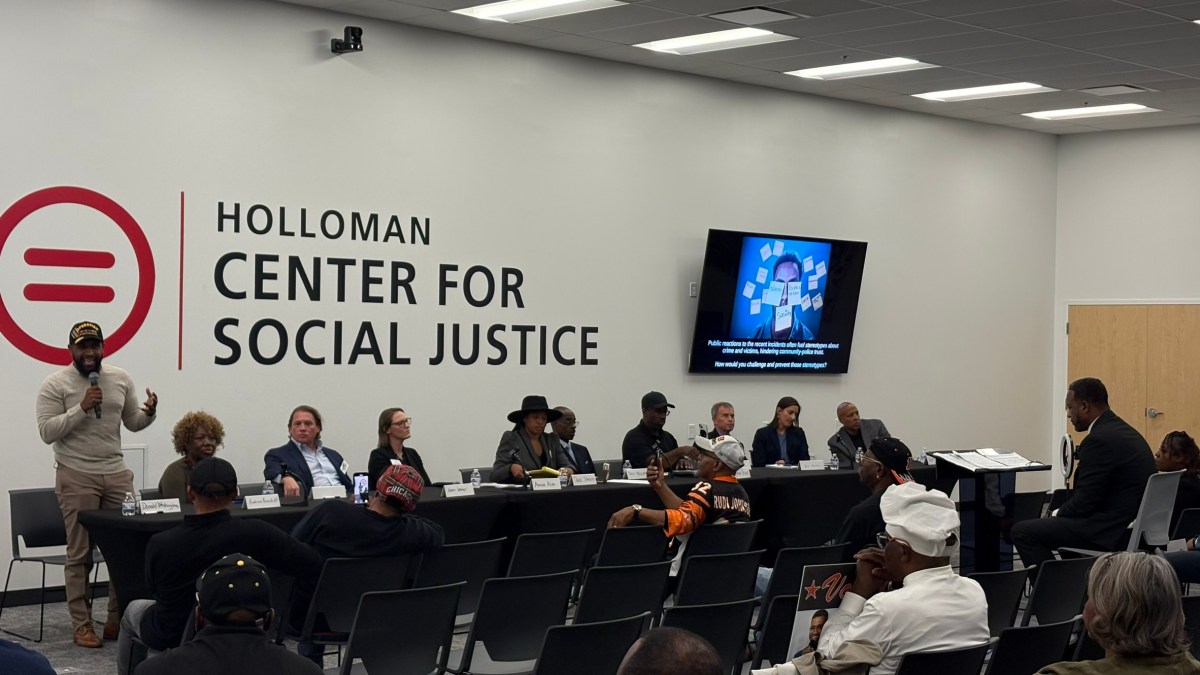
- Nine Cincinnati City Council candidates appeared at a forum Wednesday hosted by the Cincinnati NAACP, Price Hill Masons and Urban League of Southwestern Ohio.
- Candidates’ main priorities were youth services, job and small business development and housing.
Documenter’s follow-up question:
- How would candidates help communities who oppose development over fears of gentrification and displacement? Would they promote opposition initiatives, with a focus on Black neighborhoods?
The My Vote Matters forum for Cincinnati City Council candidates began at 6 p.m. It was moderated by Cincinnati NAACP President David Whitehead.
Candidates present:
- Anna Albi, incumbent
- Scotty Johnson, incumbent
- Donald Washington
- Stephan Pryor
- Aaron Weiner
- Dawn Johnson
- Audricia Brooks
- Don Driehaus
- Dale Mallory
This was the second council candidate forum at the Holloman Center for Social Justice. All 26 candidates were invited. On Wednesday, the second iteration of the forum, nine candidates appeared.
Each candidate had one minute to answer each question.
Introductory questions
Question for incumbents and former council members: As a city council member, what grade would you give yourself and why?
Anna Albi
Albi, a first-term council member, said she would give herself a B+ so far. She said she led the charge to contribute $1 million to food insecurity, particularly to neighborhoods hardest hit by gun violence.
She said she has room for improvement when working with the administration more efficiently, and to “really make sure we get the work that you all want us doing done more quickly, and really push our city forward.”
Scotty Johnson
Incumbent Scotty Johnson said he’d give himself an A+ for his work on council so far. He cited the success of the Office of Opportunity, which he and Vice Mayor Jan-Michele Kearney started. The office ensures equity is delivered when people do business with the city.
“We always have room for improvement,” he said. “No water wall, but room for improvement. That’s why I give myself an A+.”
Liz Keating
Keating was appointed to Cincinnati City Council in 2020 after P.G. Sittenfeld resigned over allegations of public corruption. She was not elected for the following term.
She said during her time on council, she’d give herself an A. She focused on public safety. The last few years, when she hasn’t been on council, she worked to promote state and federal policies for childcare and housing. There are not enough services to support youth, rec centers and youth jobs, she said. “I will continue to fight for our kids,” she said.
Question for new candidates: What is your party affiliation, and what inspired you to run for Cincinnati City Council?
Dale Mallory
Mallory first explained his family’s longtime involvement in Cincinnati politics. His younger brother, Mark, served as mayor, and his two older brothers are judges.
Dale Mallory served eight years as state representative for the 32nd House District under Gov. Ted Strickland. He was chair of the brownfield committee and vice chair of the transportation committee.
“I wanted to make a difference,” he said of his inspiration to run.
Stephan Pryor
Pryor said he ran to represent the Black community, citing receivership, displacement due to gentrification, lack of transparency surrounding the railroad sale revenue, and more. He frequently goes to City Hall to speak during public comment.
“I love helping people,” Pryor said. “I ran because I have a purpose to help the community.”
Donald Washington
Washington, an Independent candidate and Over-the-Rhine native, ran for council because he is tired of the “same old, same old.”
“Like I said, I’m from downtown. I know what those types of communities go through,” he said. “I’m a kid that made it through that, and I want to offer that opportunity to those kids as well.”
Aaron Weiner
Weiner said he would use his 45 years of real estate experience to address the issues of housing development. He has experience in business, activism, nonprofits and other industries and aims to continue his community service to make a difference and give back to the community.
Brooks
Brooks’ party affiliation is Democrat. She has lived in Cincinnati her entire life. She is a nurse practitioner at the VA Medical Center and is accustomed to looking at communities holistically: “I want to offer my expertise to the City of Cincinnati.”
Driehaus
An independent Democrat, has been active on the West Side for 20 years and has been engaged with youth who are dealing with problems. “Right now we need actions, not plans.”
Economics and economic empowerment
After introductory questions, candidates were asked different questions. The first category was economics and economic empowerment.
Question: What initiatives will you support to close the racial wealth gap in Cincinnati?
- Washington said he agreed with the findings in the Futures Commission report that Cincinnati is too slow with business permits and inspections. He supports a centralized office that can help speed up that process.
- Keating said the answer is investment in after-school programming to ensure parents’ success in the workplace.
- Scotty Johnson highlighted the city’s children’s savings account as a way to provide opportunities long-term to close the racial wealth gap.
- Weiner said he wants to provide access to homeownership and make it easier to start a business.
- Mallory promoted his work with the Hamilton County Inner-city Agricultural Initiative to inspire youth to pursue careers in agriculture.
- Pryor said big companies should get a tax break if they hire people previously convicted of a felony. The city needs to spend less money in general, he said.
- Brooks said the city needs to focus on its youth to achieve economic goals. If elected, she would prioritize funding summer activities and after-school programs.
- Dawn Johnson pointed to equity issues and used the cannabis industry as an example, as only one dispensary is owned by a Black entrepreneur. She also suggested new zoning laws for home businesses and establishing a rent-to-equity fund.
- Albi also highlighted the children’s savings account. The city is giving 150 children $553 each to accumulate and pay for secondary education. The city has also embraced $50 million in medical debt for more than 50,000 Cincinnatians. Albi also mentioned a new grocery assistance program that provides 200 families in Winton Hills $100 a month. The city is helping with energy costs by launching a Green Bank initiative.
- Driehaus said capital investment to neighborhoods and incentives to small businesses would help close the wealth gap. A former chair of the Cincinnati Metropolitan Housing Authority board, he wants to revisit a federal program that allows people to use rental vouchers to offset mortgage payments. That could build real wealth, he said.
Question: With the national unemployment rate at 4.3% and many organizations facing funding cuts that may force tough staffing decisions, what is the role of city council in supporting affected residents?
- Mallory said city council should look to the state to financially support residents as local government faces funding cuts. This would require more collaboration between the state, city and county, as well as public-private partnerships.
- Pryor again pointed to government spending as a cause. City workers don’t have a pension anymore, he said.
- Brooks suggested creating a job loss program that could defer rent, utility payments, etc.
- Weiner pointed to business development programs as a way for people to work for themselves by starting a small business.
Question: What is your strategy to reduce unemployment or underemployment in Black and brown communities?
- Driehaus said expanding jobs for all the capital projects underway in the city. For example, the new convention center and Paycor Stadium renovation.
- Washington also pointed to opportunities for small businesses, offering prospective entrepreneurs access to capital to make it happen.
- Dawn Johnson said people need a more flexible, modernized workforce so families can focus on building generational wealth.
Question: With companies laying off workers, what can city council members do to ensure the stability of the local economy?
- Albi cited the millions the city invested in workforce development programs. The Urban Futures program, through the Urban League, is encouraging minority workers to enter the building trades, where there are good-paying union jobs. A city fund is aiming to double the number of minority-owned businesses in the coming years
- Keating said the city should partner with the Minority Business Accelerator to create jobs.
Housing questions
Question: Based on your research, what are two policies that you would prioritize implementing that would have the greatest impact on the current housing situation in Cincinnati?
- Scotty Johnson said he would prioritize policies to include all income levels for housing as well as proper zoning to ensure housing is readily available.
- Albi said the city is making up for lost time with housing development and clear zoning policies would help developers move plans forward faster.
- Dawn Johnson said she is focused on affordable living rather than affordable housing, because big developers will build luxury housing, causing displacement of neighbors anyway. She suggested reimbursing or raising minimum wage so people can afford to stay in their homes.
- Weiner said naturally occurring affordable housing is the answer. That means working with the county to keep taxes low, and, thus, rent stays low, he said.
- Keating said the childcare and housing crises could be pulled together, which would open up more grant funding at the state and federal level for two-family housing. This would create more pathways to homeownership and generational wealth.
Question: Other cities are beginning to subsidize housing for repairs and updates. What policies would you implement so more senior citizens can keep their homes, or live in their homes as long as possible?
- Brooks said age-specific tax abatements would help seniors keep their homes.
- Washington said it’s not just about tax abatements in family homes. Nursing home conditions need to be improved and senior living needs investment.
- Driehaus said the city needs programs to help seniors maintain their properties. Seniors also need assistance transitioning to a better form of independent living, like a condo.
- Mallory said seniors can’t keep up with rising property taxes. Expanding city jobs to help clean up properties would help those seniors.
- Pryor said it’s not a state problem; it’s a city problem. A city inspector could fine homeowners. Nursing homes also need better conditions.
Question: How would you hold developers accountable for inclusive and equitable housing practices?
- Driehaus said the city should put pressure on financial institutions to ensure housing that is available can be loaned and utilized for people who need it.
- Pryor said get rid of developers because they keep spending taxpayer dollars to build their own wealth. Nonprofits like 3CDC get too much money from the city, he said.
- Brooks said every neighborhood should have community benefit agreements so developers don’t do things that don’t benefit the community. She cited a Detroit city ordinance that covers this issue.
- Keating said the Affordable Housing Trust Fund she started while she was a council member could get more money into community development to build two- to four-family housing. People can buy or build these properties, they can rent out other units, and thus generate wealth.
- Washington said predominantly Black neighborhoods should be served by contractors who employ a certain percentage of Black workers. The homes should also have a certain percentage of Black residents.
- Scotty Johnson said community agreements like Brooks mentioned is a start. Developers need to keep their promises. He also cited the Hyde Park Square development as an example of what can go wrong when the community is not in agreement with a developer.
Question: What policies would you champion to prevent displacement and gentrification in historically Black neighborhoods like Avondale and Walnut Hills?
- Albi said stakeholders should have a seat at the table early on so they can give input on how they want their community to grow. People need to know about income-restricted housing.
- Weiner said he doesn’t want to gentrify anything. Neighborhood councils should be involved from the start of any development plans.
- Mallory said he would empower communities to submit public purpose letters to the city and say whether or not they support changes. As a result, he said he would stop giving support letters to those seeking to develop Black neighborhoods.
- Dawn Johnson said the Connected Communities ordinance should be repealed and replaced because it contributes to displacement in Black neighborhoods. Big developers receive too many tax incentives, luxury apartments go up, and housing prices increase across the board, causing displacement.
Public safety
Question: There is a public perception that crime is rising, but data shows it is declining. How do you address public concern?
- Dawn Johnson said the city must look at the safety issue holistically, invest in youth opportunities, and implement trauma recovery centers in schools and rec centers.
- Weiner said police officers should be incentivized to live in the city they serve, providing a level of leadership that breaks down barriers between community and law enforcement.
- Pryor said the city must push for job opportunities for young people to deter crime.
Question: Public reaction to recent incidents often fuels stereotypes about crime and victims, hindering community and police relations. How would you challenge and prevent those stereotypes?
Driehaus said the idea of bringing in National Guard troops to Cincinnati is “garbage.” Youth outreach is the answer.
Washington said he would revive the Citizens Committee for Youth, create mixed-wealth adult public schools, and promote a gun buyback program.
Scotty Johnson said council did a “horrible job” in controlling the narrative in Cincinnati amid the video of the fight downtown. He said elected officials must show up to ensure these types of things do not enhance stereotypes.
Brooks said the city could ask local media to highlight youth in a positive way to deter stereotypes.
These notes can be found on documenters.org.
If you believe anything in these notes is inaccurate, please email us at documenters@signalcincinnati.org with “Correction Request” in the subject line.
Find more Documenters’ notes on Cincinnati City Council here.