
Meeting summary:
- The Cincinnati Recreation Commission (CRC) is implementing a plan to improve its oversight and regulation of purchasing cards (P-cards) following an investigation into their use.
- Building upon recent success, the CRC has made a long list of expansions and improvements to summer programming, including an expansion of the Rec @ Nite program and golf scholarships that hope to bring diversity to the sport.
- The CRC presented the language for its Immigration and Customs Enforcement (ICE) policy, on which the Board of Commissioners will vote at a later date.
Documenter’s follow-up question:
- What is the language of the new ICE policy? (Most of the links that related to the CRC that appear in web searches are broken and only return to the home page, so I have not been able to find the policy language.)
- What prompted the P-card investigation, and where did the investigation initiate?
- How will the CRC follow up on the board members’ suggestions to improve marketing and dissemination of information regarding volunteer opportunities and community resources?
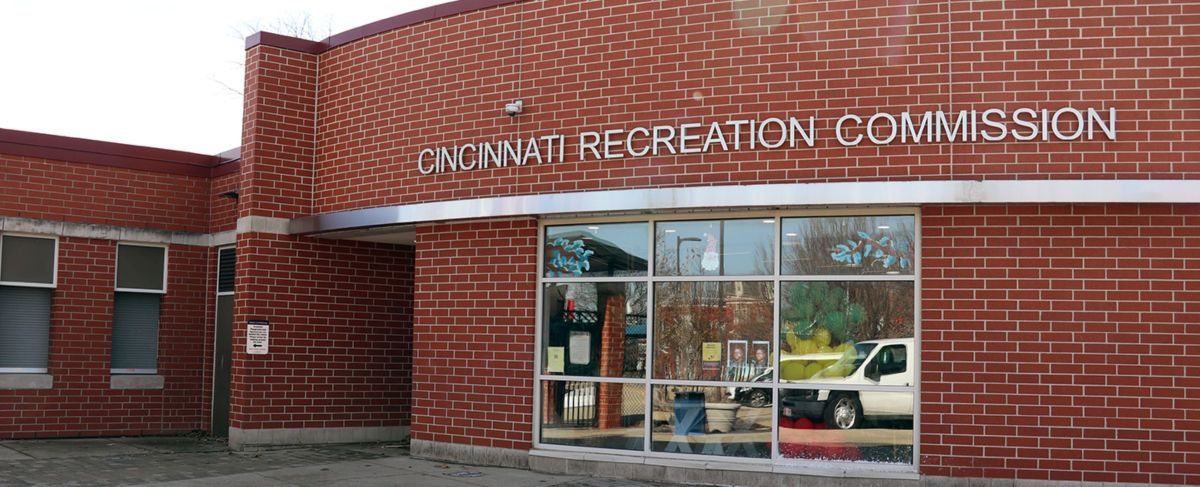
The Cincinnati Recreation Commission (CRC) is looking forward to expanded public programming and new opportunities for both paid and volunteer work this summer. During their meeting on Tuesday, May 20, 2025, board members maintained a jovial tone, reporting successes overall.
The May 20, 2025 meeting opened with new staff introductions and announcements, including the promotion of Salissou Nabaran to computer systems analyst, and the hire of Aji Awa Saho as an accountant, new community center directors Keith Dixon and Donna Mitchell-Griffin, and laborer Michael Elliot. Commission board members also expressed gratitude for the 35-year career of retiring accountant Dan Hamberg.
P-Card Improvement Plan: Presentation and Discussion
Tiffany Stewart, Assistant Director of the CRC, presented the findings of a recent investigation into the use of purchasing cards, or P-cards, within the department, which included a plan for improvement.
In response to findings related to insufficient oversight, poor communication, and insufficient planning that led to increased use of P-cards and uncertainty about their distribution, the commission plans to reduce the number of P-card holders by a target 30 percent; implement new review procedures, use protocols, and mandatory trainings; and will hold listening sessions and continue an internal review of practices and inventory. The commission will implement the plan in three phases this summer, with expected completion by the end of August.
“Our plan is rooted in accountability, transparency, and a strong commitment to financial stewardship, while at the same time recognizing the importance of not demoralizing our dedicated staff for honest mistakes,” CRC Director Daniel Betts said in a prepared statement.
In the open question and answer period following the presentation, commission board members sought further clarification and expressed additional priority concerns.
“There will always be some purchases that a P-card is going to be more suited to buy than doing a PO [purchase order] process,” Betts said. “I think what has happened historically with us is that the P-card has become the go-to versus planning and using the procurement PO process. I will say that one of the reasons I think staff are using the card versus the PO process is that the PO process is not just an internal process. Once that PO leaves us, it gets held up. It often times takes us anywhere between three to four, five months to get something purchased.”
[Documenter’s note: I’m not sure what PO stands for.]
He later added, “We are going to address that. That is a cultural shift within our organization.”
At the time of the audit, there were 58 P-cards in distribution, Stewart said. P-cards have a transaction limit of $3000 and a monthly limit of $10,000. Betts described an exceptional situation in which they received a grant award from the state that they were required to spend within a 30 or 60 day period, which he said was “almost impossible within the city structure.” Upon meeting with the City Manager, Betts said that they received approval for an increase.
“One of the things you saw in the investigative report is that there was a staff person who did not go over the $10,000 limit, but certainly spent $100,000 on TVs and so forth. That was because we had to buy these TVs and [inaudible – sounded like Bobby?] gave us an increase on her card so she could buy these TVs,” Betts said. “You will find in the report, though, that not a single TV was missing.”
Commission Board Member Tom West questioned whether card limits should be lowered.
“You’re bringing stuff to us that’s $20,000 for approval. I’ve got a lady with this card who just went out and spent $100,000. So that’s what I see,” West said. “I just was wondering, are these limits realistic, or should they be even lower than that? I personally think that when people start spending over a thousand on these cards, somebody higher up should be approving this.”
Betts said that they are planning to make changes in the finance approval and reconciliation process, including allowing more time for the Finance division to review expenditures.
“On a monthly basis, once the statement closes, we have six days to reconcile all the cards and documentation and submit that to a central accounting area. That timeframe is very tight with 57 cards. Not all 57 may use it every month, but 30,” Jeanette Shoecraft, Division Manager of Finance, said.
“And so, we are asking to increase that timeframe to allow the SRCs [Supervising Recreation Coordinators] time to review the documentation and purchases before Finance gets those,” Shoecraft said.
The P-Card Improvement Plan also includes new protocols for food and alcohol purchases. Betts said that CRC has historically held the liquor license for alcohol sales in some recreational facilities, but would like to see third-party vendors assume the responsibility instead. Past policy has allowed alcohol to be purchased on P-cards, but Betts said that was not the case in the recent investigation.
Summer Programming 2025
Assistant Director Dave Harris introduced a small group of Supervising Recreation Coordinators (SRCs) to deliver a presentation on summer programming, through which the CRC hopes to improve equity through recreation, education, and employment opportunities. Brandi Sanders, Division Manager of Operations, said that they are focusing on childcare and teen activities, and highlighted efforts for aquatics and expanded golf scholarship programs. “One of the things we have been missing is diversity on the golf course,” Sanders said.
Public Pools
23 outdoor public pools will be open in Cincinnati this summer, as some indoor pools, like Mt. Auburn, close to the public to accommodate staff training. In addition to existing programming, CRC is introducing three new adult programs in aquatics this summer.
Public pools will open in three waves in late May and early June. The city has hired 80 percent of needed lifeguards so far.
Summer Day Camp
19 recreation centers will host summer day camps this year, said Supervising Recreation Coordinator Kristen Riggins. Two centers will offer Therapeutic Recreation Summer Day Camp, and two will offer Tween Camps. North Avondale Recreation Center will host a STEAM specialty camp, Riggins said. The traditional day camp reached 91 percent enrollment by May 1st this year, while specialty camps will continue to enroll on a weekly basis.
The CRC has improved and standardized summer camp enrollment processes and staff training.
“We’ve been standardizing those processes and procedures to be in line with licensed childcare and state compliance rules so that in the future, if we were to expand our licenses, that would be an easy process for our staff, as they would already be familiar with the rules and regulations,” Riggins said. “All full time staff have been asked to complete the OCCRRA School Age Endorsement training, which is about 60 hours of training.”
CRC has also created a summer day camp planning workbook to aid staff preparation and implemented monthly meetings and staff training sessions, as well as improved late-hire training and an improved training manual. Summer day camp staff will also be trained in trauma-informed care and Universal Design for Learning.
“All of the programs and activities that are planned align with the K-12 standards, so staff will now have to outline how those have an education or academic benefit for the student or participant,” Riggins said.
CRC day camps are “looking to provide wraparound care,” so the CRC will now provide a family resource form, Riggins said. “From our trauma-informed care initiative, we know our families need support. So this document will help us refer and align families with social service agencies that can provide services for them as they need.”
Commission Board Member Kick Lee proposed mailing or otherwise distributing the resource form to residents, such as through a digital calendar, which Sanders concurred would be “a great idea to take a look at.”
“I am particularly interested and I’m thrilled to see the K-12 standards, as you can imagine. I think that’s incredibly useful for us and I think the more we can share that [the better],” commission Board Member Eve Bolton said. Bolton suggested further efforts to share resources with the public online and with partners, and to coordinate with CPS.
Golf
Building on recent success, CRC is continuing to expand its golf offerings with a focus on improving diversity in golf through scholarships, including new programs specifically for girls, who are underrepresented in the sport. In the most recent season, over 2300 youth participated in multi-day golf programs free of charge, said Supervisor of Golf Rob Higby.
“A lot of these have meals attached to them, so there is a food component that also is in there, so they are going home with full bellies. And we supply bussing services to probably about 25, 30 percent of those students as well,” Higby said.
The expansion of programming to include girls-specific camps responds to feedback from last year, Higby said. Programming will also expand to more golf courses to accommodate popular interest.
“We are tapped out with what we can do at Reeves. We are out of space, we are out of people,” Higby said. CRC will begin to offer programming at Avon and Glenview courses.
Paid golf instruction has seen similar success.
“We actually brought on a couple new instructors over the last year and a half, and we have increased our paid instruction by 300 percent through our academy down at Reeves,” Higby said.
The CRC Golf Academy has launched a new booking engine for online registration, accessible from the CRC website.
“I’m excited to hear that you’re expanding to girls this summer,” commission Board Member Leslie Rich said.
Rec @ Nite
Rec @ Nite, which Supervising Recreation Coordinator DeVeta Webb said “serves as a way to bring our teens into a safe environment and have a good time throughout the summer,” will return this year with a greater capacity. By offering teens a fun and safe space weekly on Saturday nights, the program aims to reduce youth violence.
Both Lincoln and Hirsch community centers will host the program every week, expanding from last year’s program in which the centers took turns hosting the program on alternating weeks. CRC expects that at least 250 youth will attend each night at each location, where they will have the opportunity to enjoy swimming, E-sports, and DJs, among other activities, said Supervising Recreation Coordinator DeVeta Webb.
Last year, Rec @ Nite received the OPRA Governor’s Award for its success. As it was, at that time, a pilot program, “we had a very short time to plan it, but the team came together,” Sanders said.
CRC is seeking volunteers to help with Rec @ Nite this summer.
The Teen Council and the Advisory Board will also assist as volunteers, Webb said.
“Our Teen Council is about 25 kids. They have joined to do community service and learn leadership skills and look at different career activities,” Webb said. “Even tonight, they are meeting. They meet one time a month. Tonight they will have someone come out and speak to them about mental health.”
“The Advisory Board is about nine youths,” Webb said. “They are the voice and leadership to help us determine what type of activities are wanted and needed in their communities.”
“These are voices we are relying on not only for assistance but also to get the word out about Rec @ Nite,” Webb said. “In order to be successful, we need to make sure that the youth understand we are there for them and that we are presenting programming that is replicating what they need to see and what they feel.”
Brandi Sanders emphasized the importance of having consistent volunteers.
“We have found that, even through some of the trauma training, that the kids need to see consistent faces,” Sanders said. “That is what creates the safe place. It is not the location, but it’s the people.”
Rec @ Nite is open to all youth, regardless of whether their neighborhood rec center is hosting the event. The CRC assists in transportation.
“If the teens show up and one to go, each one of those other centers will typically bring kids there, if the kids show up,” Sanders said. “We also provide bus passes, so we have addressed the transportation since last year.”
“But believe it or not, these kids are finding a way to get there regardless,” Sanders said.
Board member Pat O’Callaghan asked whether the CRC is doing anything to market the volunteer opportunities, online or elsewhere.
“Is this in writing anywhere? Is this on materials? Is this online, ways that people can get involved with rec?” O’Callaghan asked.
“Not necessarily, but it is absolutely something we can look into,” Sanders said.
“The closest we have come to that with our pilot was that the city committed, announcing and encouraging city staff to do it,” Betts said.
Recreation Operations and Capital Improvement Updates
Dan Jones, Division Manager for Planning and Development, presented capital improvement updates.
Camp Washington is slated to receive a new skate park. The CRC is hoping to begin the design phase by winter of this year. The City will release a Request for Proposal (RFP) to hire the design team.
The CRC will also proceed with capital improvements at Ashland Park, the Owls Nest, and Bush Recreation Center in Walnut Hills; the Dyer Recreation Area Sprayground; the ballfields at Turkey Ridge, Paddock, and Tennessee; and Losantville Triangle and the Madisonville Tennis Courts, which will receive new parking lots to replace grass parking. Several golf courses will receive capital improvements as well, Jones said.
Public Meal Service Updates
Community centers, in addition to serving as emergency cooling and warming stations, will now offer community freezers through the Cincy Freeze & Feed Program in partnership with the Cincinnati Health Department, Hamilton County ReSource, and CareSource, Sanders said. At the Hirsch community center, over 1200 meals were served “within the first couple of days,” Sanders said.
“If they decide to take ten meals at one time, it’s free,” Sanders said. “And so it’s been very welcoming in the community.”
Meal distribution is currently available at Hirsh, Millvale, and Hartwell, which is awaiting a freezer but has an operational pantry service with fresh food.
“The way it’s set up, it looks like you’re going to the grocery store. There’s cereal, there’s crackers, and then there’s nutritional guides that are listed for the families to observe,” Sanders said.
“Income does not matter. It does not matter how much food you need. Just come get it,” Sanders said.
CRC has also partnered with UMC Food Ministry and Cares to provide summer meal services. [I could not verify which specific “Cares” organization Sanders was referring to.]
Cares will serve meals at public pools and parks this summer to “anyone who walks up,” Sanders said.
Youth to Work (Y2WK) Updates
The Youth to Work (Y2WK) program will run at a lower capacity this year following a delayed hiring process due to uncertainty about whether the program’s federal funding would be renewed, as most of the funding for Y2WK comes from Community Development Block Grants (CDBG), said Tim Heyl, Division Manager of Business Services.
“We were proceeding with our onboarding process, but not really at the full force we would have if we had known we had funding,” Heyl said. The CRC received notice late last week that they would indeed receive the CDBG funding.
“We are going to offer the program, that’s the good news. But we are going to need to offer the program at somewhat of a reduced capacity, but still a capacity that I feel is substantial and robust,” Heyl said.
Youth in the program work with the city, such as through the Cincinnati Police Summer Cadet Program, the fire department, and at rec centers and pools.
“What I am hearing from [City] Council is they want to see a greater number of young people get employed, and not just in the summer, but year round,” Betts said. “And this director is committed to that, but in the end, the dollars have to be there in order for us to do it. So I think we’re going to have to increase the city dollar.”
Heyl said that the CRC received CAPRA accreditation.
Legislation and Policy
The CRC Board of Commissioners unanimously passed several policy updates to modify the language of internal policy for “streamlining” and clarity with little discussion.
The Board of Commissioners also reviewed the CRC’s policy on Immigration and Customs Enforcement (ICE), which will be put to a vote at a later date. I have been unable to obtain a copy of the language, but Steward said it is based on the language that the law department wrote for the health department.
“I thought it looked excellent, and I applaud you. Thank you for clarifying this,” O’Callaghan said. “These are confusing times, and this may well prove vital.”
If you believe anything in these notes is inaccurate, please email us at documenters@signalcincinnati.org with “Correction Request” in the subject line.
Find more Documenters’ notes on Cincinnati City Council here.